

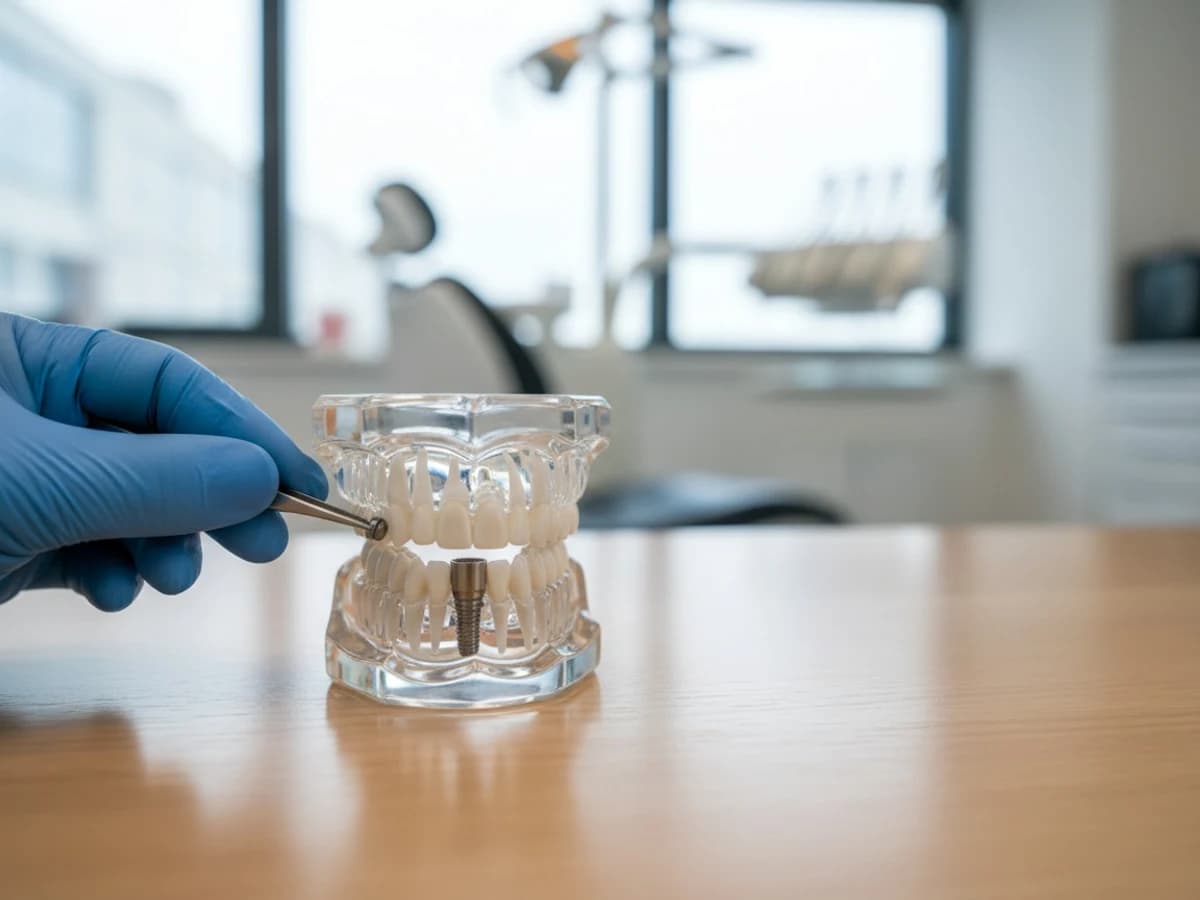
Curious about dental implants?
Dental implants are a predictable, long-term solution for replacing missing teeth. If you’re trying to understand what an implant actually is, how it works, and what to expect from the treatment, this guide covers the essentials in a clear, patient-friendly way. The goal is to help you feel informed and reassured so you can discuss options confidently with your dental team.
What is a dental implant?
A dental implant is a surgically placed replacement for a missing tooth root that supports a visible prosthesis (usually a crown). Implants restore chewing function, help maintain jawbone volume, and provide a fixed alternative to removable dentures or tooth-supported bridges. The biologic foundation of implant dentistry is osseointegration — the process by which living bone bonds to the implant surface to create a stable support for the restoration.
Key components of a dental implant
- Fixture (implant body): the root-form element placed into the jawbone. Most fixtures are medical-grade titanium because of its strength and biocompatibility; some systems use zirconia implants for patients seeking a metal-free option.
- Abutment: the connector that joins the fixture to the visible restoration. Abutments can be stock or custom-made, and they may be titanium, zirconia, or a combination depending on the case and esthetic needs.
- Crown (prosthesis): the visible tooth replacement. Crowns are commonly fabricated from all-ceramic materials (e.g., zirconia, lithium disilicate) or porcelain-fused-to-metal depending on strength and esthetic requirements.
Materials and modern technology
Implant dentistry uses a combination of biologically compatible materials and advanced imaging and manufacturing techniques. Common elements include:
- Titanium implants — the most established and widely used fixture material.
- Zirconia fixtures and abutments — metal-free options with good biocompatibility, used selectively.
- Ceramic crowns — for natural-looking esthetics and color matching.
- CBCT (3D imaging) — cone-beam CT allows precise evaluation of bone volume, nerve positions, and sinus anatomy for safe, prosthetically driven planning.
- Digital workflows — intraoral scanning and CAD/CAM fabrication improve accuracy of abutments and crowns and shorten turnaround times for restorations.
Who is a suitable candidate — and what are the limits?
Many people are eligible for implants, but success depends on careful case selection and management of medical and local risk factors. Typical indications and caution factors include:
- Good candidates: patients with one or more missing teeth, adequate jawbone (or willingness to consider bone grafting), and good oral hygiene.
- Factors requiring caution or additional treatment: insufficient bone volume (may need augmentation), active gum disease, heavy smoking, uncontrolled systemic conditions such as poorly controlled diabetes, or conditions that impair healing.
- Special considerations: patients with bruxism (tooth grinding) may need protective devices (night guards) and careful restorative design to prevent mechanical overload.
Step-by-step overview of the treatment process
While individual plans vary, the typical implant journey involves these stages:
- Consultation and planning: clinical exam, 3D imaging (CBCT) and digital scans to assess bone, anatomy and develop a prosthetic-driven plan.
- Pre-treatment preparation: treatment of gum disease, extractions, or bone grafting if needed. Health issues are reviewed and stabilized before surgery.
- Surgical placement: the fixture is placed into the jawbone under local anaesthesia (with sedation options if desired). Sutures and a healing period follow.
- Healing and osseointegration: bone remodels and bonds to the implant surface. This biologic integration commonly takes several weeks to a few months depending on bone quality and whether grafting was performed.
- Prosthetic phase: once stability is confirmed, the abutment is attached and impressions or digital scans are taken. A custom crown is fabricated and fitted, often using CAD/CAM technology.
- Maintenance and follow-up: routine check-ups and hygiene visits help preserve implant health and the long-term function of the prosthesis.
Benefits and potential risks
- Benefits: improved chewing ability and speech, natural appearance, preservation of surrounding bone, and a fixed solution that does not rely on adjacent teeth for support.
- Risks and complications: surgical complications, failure of osseointegration, peri-implant mucositis or peri-implantitis (inflammatory conditions that can affect supporting tissues), and mechanical issues with the crown or abutment. Proper planning, oral hygiene, and regular maintenance reduce these risks significantly.
Recovery and long-term care — practical tips
Recovery after implant surgery is usually manageable with short-term discomfort and swelling that resolves in days. To support healing and long-term success:
- Follow post-op instructions: rest, avoid strenuous activity for the first 48–72 hours, and use prescribed medications as directed.
- Maintain meticulous oral hygiene: brush gently around the healing site, use recommended antimicrobial rinses, and return for professional cleaning and monitoring.
- Address risk factors: stop smoking if possible, control diabetes, and treat gum disease before implants are placed.
- Protect restorations: if you grind your teeth, ask about a night guard to protect the crown and implant components from excessive forces.
Why consider treatment in Antalya with Dentsun International
Many international patients choose Antalya for dental care because clinics combine high clinical standards with modern imaging and digital workflows. At Dentsun International, our team offers comprehensive implant care using CBCT planning, experienced surgical and prosthetic specialists, and CAD/CAM fabrication for accurate, esthetic results. We also provide coordinated care for international visitors, including clear treatment plans, aftercare guidance, and assistance with appointments to make your experience as stress-free as possible.
Final thoughts
Dental implants are a robust and well-studied solution for replacing missing teeth when planned and executed carefully. Understanding the components, the biologic principles of osseointegration, and the steps involved helps set realistic expectations. If you’re considering implants, a detailed clinical assessment and 3D imaging are the first steps — and the team at Dentsun International is available to answer questions, review your options, and guide you through a safe, personalized treatment plan.


