

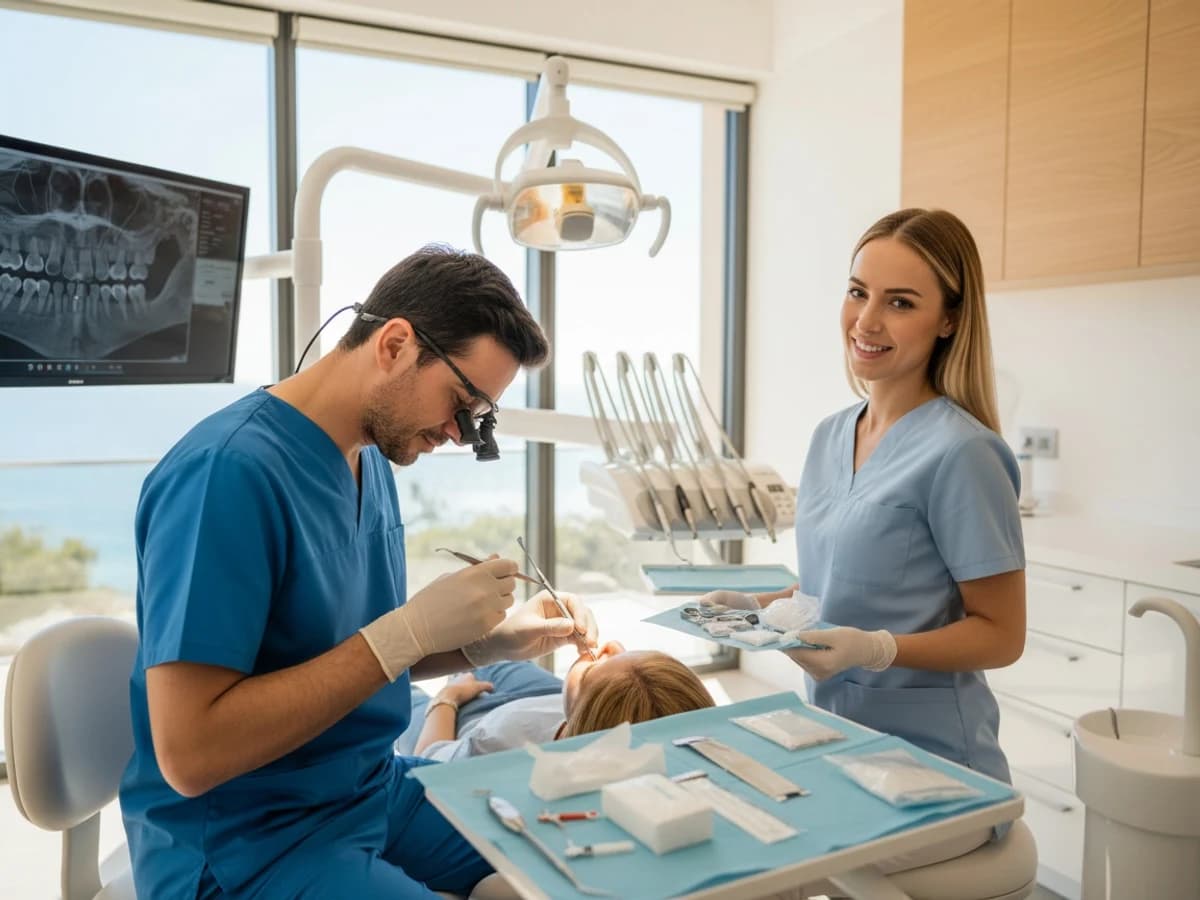
Preparing for dental implants in the upper back jaw often requires a sinus lift to create a stable foundation of bone. This guide explains, step-by-step, what a sinus lift involves, the differences between lateral and crestal approaches, commonly used graft materials and technologies, realistic healing timelines, and practical travel considerations if you are visiting Antalya for treatment. Our goal is to reassure you with clear, evidence-based information so you can plan with confidence.
What is a sinus lift and why is it needed?
A sinus lift (sinus augmentation) raises the floor of the maxillary sinus to increase bone volume in the posterior maxilla. After tooth loss the sinus can expand (pneumatize), leaving insufficient residual bone height (RBH) for secure implant placement. When RBH is limited — commonly below clinical thresholds — a sinus lift makes implant-supported restorations possible and predictable.
Lateral (open) vs crestal (closed): choosing the right approach
- Lateral (open) sinus lift: Indicated when RBH is very limited (commonly <5 mm) or when several adjacent teeth need implants. A small window is made in the buccal bone to visualize and gently elevate the Schneiderian membrane. This approach allows larger graft volumes and more extensive augmentation.
- Crestal (closed) sinus lift: Best for cases with moderate RBH (commonly ≥5 mm) where a less invasive technique is suitable. The sinus floor is elevated through the implant osteotomy using osteotomes, hydraulic or balloon-assisted methods. It’s often done at the same time as implant placement for single sites with moderate bone loss.
Step-by-step procedure (what to expect)
- Consultation and imaging: A CBCT scan and clinical exam map sinus anatomy, RBH, membrane thickness, and any sinus pathology. CBCT is essential for safe planning.
- Anesthesia and comfort: Local anesthesia is standard. Sedation or general anesthesia is available for anxious patients or more extensive procedures.
- Access and membrane elevation: For lateral lifts, a small buccal window is created; for crestal lifts, the elevation happens via the osteotomy. The Schneiderian membrane is gently separated from the sinus floor — care here reduces perforation risk.
- Grafting and implant placement: Graft material is placed under the lifted membrane. If RBH and primary stability are adequate, implants may be placed simultaneously; otherwise the graft is allowed to integrate before implant placement.
- Closure and protection: Sutures and often a resorbable collagen membrane are used to protect the site. Post-op CBCT or radiographs confirm graft position when indicated.
Graft materials and technologies used
Modern sinus lifts use a range of evidence-supported materials and instruments:
- Graft options: Xenografts (deproteinized bovine bone), allografts, synthetic materials (β‑tricalcium phosphate), and in some cases autologous bone or platelet-rich fibrin (PRF) to accelerate healing. Many clinics prefer xenografts or synthetics because they avoid a donor site and provide predictable scaffold properties.
- Membranes: Resorbable collagen membranes are commonly used to seal the lateral window or reinforce repairs of membrane tears.
- Advanced tools: CBCT for 3D planning; piezosurgery for precise bone cutting with reduced risk of membrane damage; hydraulic or balloon-elevation systems for minimally invasive crestal lifts; digital surgical guides when implants are placed simultaneously.
Healing timeline and follow-up
Healing times depend on the approach, graft material and whether implants are placed at the same visit:
- Crestal lifts typically integrate faster when RBH already offers good stability — healing and ossification are often reassessed between three and six months.
- Lateral lifts may require a longer integration period (commonly four to nine months) before implant placement if implants are staged.
- Immediate recovery usually involves mild swelling and discomfort for a few days, controlled with analgesics and cold packs. Patients typically return to light activity within one to two days, but clear guidance from your surgeon will reflect your specific case.
- Follow-up includes suture removal at about one week, interim clinical checks, and radiographic assessment (CBCT or panoramic) at three to six months to confirm bone fill.
Risks, complications and how they are managed
Sinus augmentation is a well-established procedure with high overall success rates when performed by experienced surgeons. The most common complication is membrane perforation, which can usually be repaired intraoperatively with collagen membrane and careful technique. Infection and sinusitis are uncommon and are prevented with sterile technique, appropriate antibiotics when indicated, and preoperative management of any active sinus disease. Smoking increases the risk of graft failure and delayed healing; cessation before and after surgery is strongly advised.
Travel and treatment planning for Antalya visitors
Antalya is a popular destination for international patients because many clinics offer modern technology (CBCT, piezosurgery, digital workflows) and coordinated care with English-speaking teams. At Dentsun International and similar clinics, treatment is planned to minimize travel interruptions while maintaining safety:
- Bring your CBCT or allow the clinic to take up-to-date imaging on arrival.
- Discuss your travel plans with the surgical team — they will advise how long to stay for immediate post-op checks. For less invasive crestal procedures, return travel is often possible sooner than after a staged lateral augmentation, but this depends on your individual case and surgeon’s recommendation.
- Arrange accommodations near the clinic for the first few days and book flexibility for follow-up imaging at 3–6 months as advised.
Practical preparation and recovery tips
- Avoid blowing your nose, using straws, or forceful sneezing for at least two weeks to prevent pressure on the grafted area.
- Stop smoking well before surgery and avoid it during healing — smoking impairs blood flow and increases failure risk.
- Follow dietary advice: soft foods for several days and gradual reintroduction of normal chewing as comfort allows.
- Use medications and nasal care exactly as prescribed; inform the team of any sinus history or allergies at your consultation.
- Keep follow-up appointments — CBCT checks at the appropriate interval are critical to confirm graft integration before implant loading.
If you are considering a sinus lift as part of an implant plan, discuss your individual anatomy, medical history and travel needs during a comprehensive consultation. Many patients find the combination of Antalya’s modern clinics and experienced surgical teams — including Dentsun International — offers efficient, evidence-based care with attentive postoperative support. We’re here to help you understand each step and arrive for treatment with confidence.


