

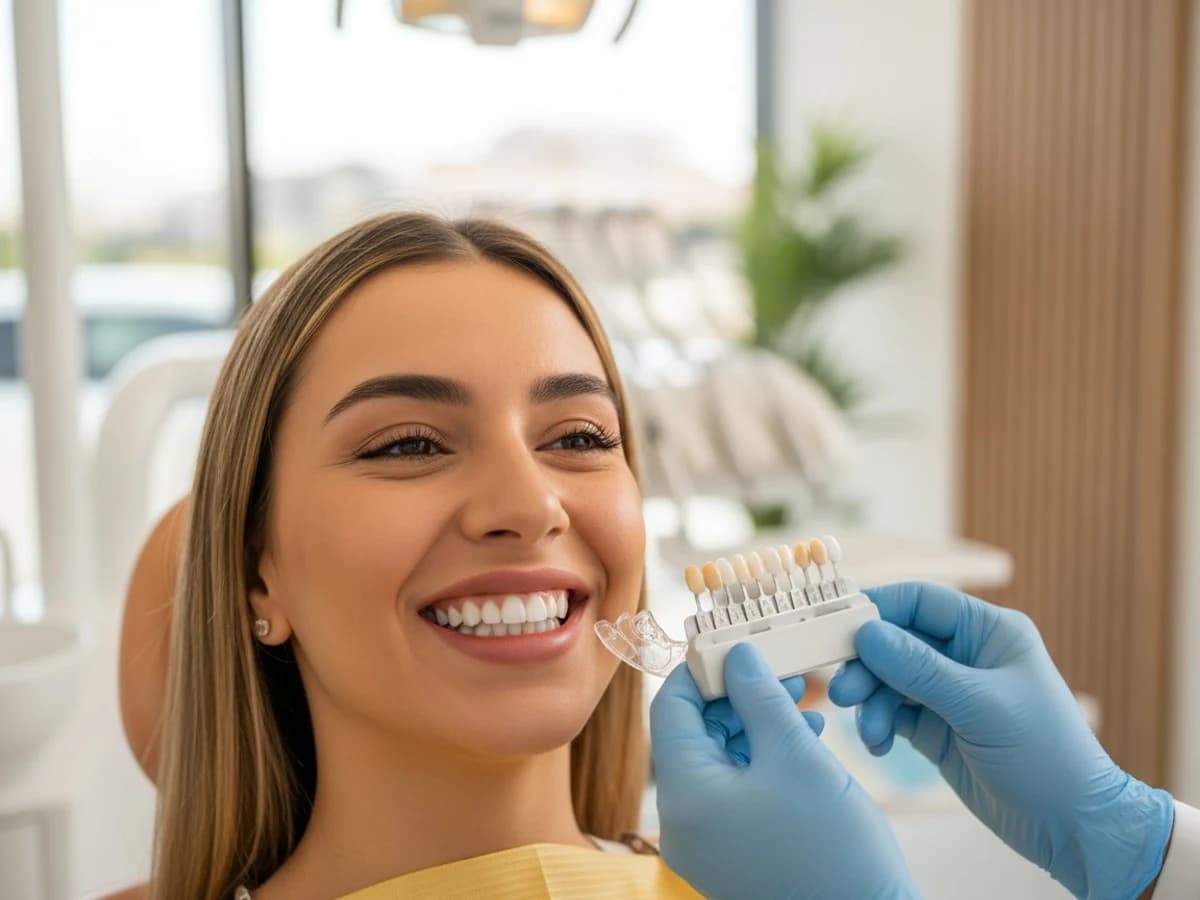
Is professional teeth whitening permanent or long-lasting?
Short answer: professional teeth whitening is not permanent, but it can be long‑lasting. With an in‑office procedure and sensible upkeep, many patients enjoy noticeably brighter teeth for months to years. Understanding how whitening works, what affects longevity, and practical maintenance steps will help you get the best, safest result.
How whitening works — and why it isn’t permanent
Professional bleaching uses peroxide-based agents (typically hydrogen peroxide in-office or carbamide peroxide in take‑home gels) to oxidize and break down staining molecules inside the enamel and outer dentin. This chemical change lightens tooth color and produces visible improvement.
However, teeth continue to age and to pick up new pigments from foods, drinks, and tobacco. That means the effect naturally fades over time. Also, whitening affects natural tooth structure only; it does not change the color of crowns, veneers or fillings, so restorative work may appear mismatched if not planned after whitening.
In‑office vs. at‑home (dentist‑supervised) — what to expect
Both approaches can be effective; the right choice depends on your goals, schedule and sensitivity tolerance.
- In‑office whitening: Performed under dental supervision using higher concentrations of hydrogen peroxide, sometimes augmented with light or repeated short applications. This method typically produces faster, more dramatic results and can lighten teeth by several shades in a single session. It is a good option when you want a quick, predictable improvement.
- Dentist‑dispensed at‑home whitening: Custom trays and prescribed gels use lower concentrations (carbamide peroxide or hydrogen peroxide) for daily or nightly wear over days to weeks. Results are more gradual but allow controlled maintenance and often cause less immediate sensitivity.
- Over‑the‑counter products: OTC strips and gels can help with mild staining but are generally weaker and less predictable than dentist‑supervised options.
Expected longevity and common relapse factors
Real‑world longevity varies. In clinical practice and reviews, in‑office treatments are commonly reported to maintain brighter teeth for about 1 to 3 years when patients follow good maintenance habits. Dentist‑supervised at‑home regimens typically last months to around a year, depending on product strength and consistency of touch‑ups.
Relapse is common and driven mainly by:
- Coffee, tea, red wine, dark sauces, curry and other pigmented foods
- Tobacco use (smoking or vaping)
- Poor oral hygiene and infrequent professional cleanings
- The natural aging and thinning of enamel
Who gets the best results?
Whitening is most successful for extrinsic stains—those caused by surface pigments from diet and tobacco. Intrinsic discoloration (for example, tetracycline staining, deep fluorosis, or discoloration after trauma) is less predictable and may require alternative cosmetic solutions such as veneers or crowns. Because restorations do not bleach, dentists will advise whether new or revised restorations will be needed for an even smile.
Typical treatment timeline and what to expect during recovery
- In‑office: Usually completed in a single appointment with immediate visible improvement. Some protocols use a single extended session or multiple short applications in one visit.
- At‑home, dentist‑supervised: Worn daily or nightly over several days to weeks; results accumulate gradually.
- Recovery: There is no downtime. Many patients experience mild, temporary tooth sensitivity or minor gum irritation, which typically resolves within days. Desensitizing toothpastes and spacing treatments can reduce discomfort.
Aftercare and practical maintenance tips
Maintenance is the single most important factor in how long whitening lasts. Practical, evidence‑based steps include:
- Brush twice daily with a fluoride toothpaste and floss daily to reduce surface staining
- Have regular professional cleanings—removing surface plaque and calculus improves both appearance and the longevity of bleaching
- Avoid or reduce consumption of staining beverages/foods for at least the first 24–48 hours after treatment when enamel is temporarily more susceptible to pigment uptake
- Quit or reduce smoking and vaping—tobacco is one of the strongest relapse drivers
- Use dentist‑recommended touch‑up treatments with custom trays or lower‑strength gels every few months or as advised rather than repeating full high‑concentration sessions frequently
- Consider a straw for staining beverages and rinse your mouth with water after consuming pigmented foods/drinks
Sensitivity and safety considerations
Tooth sensitivity is the most common side effect. Best practices to reduce sensitivity include using lower concentration gels, shorter wear times, desensitizing toothpaste, and spacing treatments. A pre‑whitening dental exam and professional cleaning help identify leaking restorations, cavities, or gum disease that should be treated first to avoid increased discomfort and to get predictable results.
Planning whitening with restorations or broader smile work
If you have existing crowns, veneers or composite restorations, talk to your dentist before bleaching. Restorative materials such as zirconia and lithium disilicate (e.max) do not change color with peroxide bleaching. Clinically, the usual workflow is to whiten natural teeth first, then adjust or replace visible restorations to match the new shade for a harmonious smile.
Why consider Dentsun International and Antalya for your whitening
At Dentsun International Dental Center we combine modern, evidence‑based whitening protocols with careful treatment planning and patient education. Antalya is a convenient medical tourism destination with excellent travel links from Europe, experienced multi‑lingual teams, and clinics equipped for digital shade matching and fabrication of custom trays for long‑term maintenance. If you are traveling for combined cosmetic dental work or a smile makeover, coordinated care in one location can simplify follow‑up and restorative planning.
Key takeaways
- Professional whitening is long‑lasting but not permanent. Expect gradual relapse unless you adopt maintenance habits.
- In‑office procedures give quicker, often stronger initial results; dentist‑supervised at‑home kits offer controlled, gradual whitening and convenient touch‑ups.
- Maintenance—cleanings, reducing staining exposures, and periodic touch‑ups with custom trays—is the most reliable way to keep your smile bright.
If you’re considering whitening and want a personalized plan—whether you’re local to Antalya or planning a visit—our team at Dentsun International can assess your case, explain realistic outcomes for your type of discoloration, and recommend the safest protocol for lasting results.


