

Can dental implants be placed when jawbone is insufficient or thin?
Short answer: in most cases, yes — having a thin or reduced jawbone is usually a treatment-planning challenge rather than an automatic reason to rule out dental implants. Modern implant dentistry offers a range of reliable techniques to rebuild or work with the bone you have so implants can be stable, long-lasting, and well-matched to your final restoration.
Why jawbone volume and quality matter
Dental implants require primary stability at the time of placement and successful osseointegration (the biological fusion of implant and bone) during healing. That depends on three main bone measurements: height, width, and density. If the ridge is too narrow, too short, or too soft, implants may lack the initial fixation they need to integrate predictably.
How specialists assess thin bone
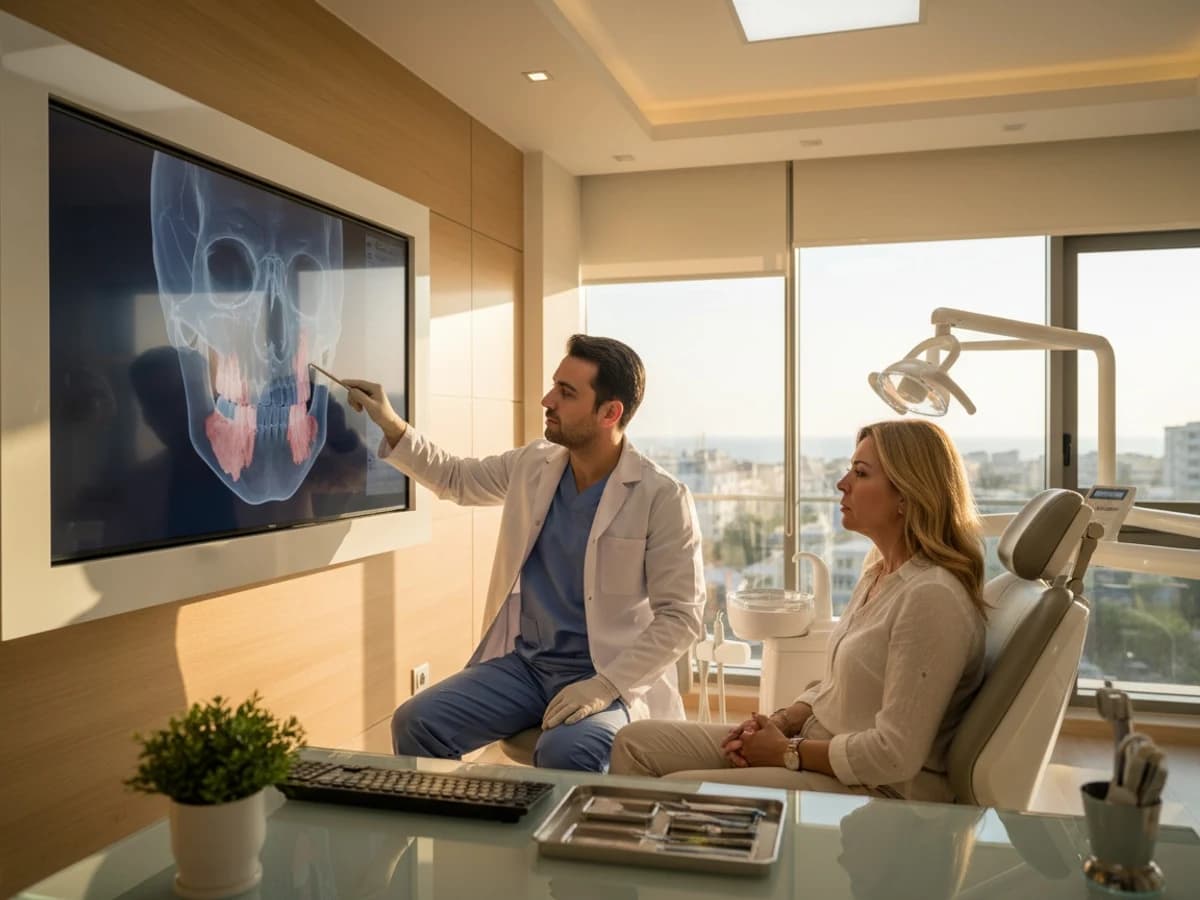
A careful evaluation is the first step. Expect a clinical examination plus three-dimensional imaging — typically a CBCT scan — to measure bone dimensions and check important anatomy (sinus position, nerve canals, cortical boundaries). Digital intraoral scans and prosthetic planning help determine where the replacement teeth must sit, which in turn dictates ideal implant position and size.
- Bone width: Determines whether a standard implant can be placed or whether the ridge needs widening.
- Bone height: Especially important in the upper back jaw where the maxillary sinus may limit vertical space.
- Bone density: Low-density (soft) bone may require special implant designs, surgical technique, or staged loading.
Options to rebuild or avoid grafting
Treatment is tailored to the pattern and severity of bone loss. Common strategies include:
- Guided bone regeneration (GBR) — particulate grafts or block grafts are placed with a membrane to encourage new bone growth. GBR is versatile for horizontal and some vertical defects.
- Block grafting / onlay grafts — a solid piece of bone (autograft or processed donor bone) is fixed to a narrow ridge to increase width before implant placement.
- Sinus lift (sinus floor elevation) — used in the posterior maxilla to create vertical height below the sinus. Techniques include a lateral window approach for larger augmentations and a transcrestal or osteotome approach for more modest lifts.
- Short implants — modern short implants are a conservative option when vertical height is limited and can avoid more invasive augmentation in selected cases.
- Narrow-diameter implants — useful when ridge width is limited and loads are moderate; careful prosthetic planning is essential.
- Zygomatic implants — a specialist solution anchoring implants into the zygomatic bone for severe posterior maxillary atrophy. These are advanced procedures performed by experienced teams.
Graft materials vary: autograft (bone taken from the patient) is biologically advantageous, while allograft, xenograft, and synthetic (alloplast) materials are commonly used as scaffolds. Barrier membranes (resorbable or non-resorbable) protect grafts during healing. Your clinician will recommend a material and technique based on the defect, your health, and long-term goals.
Technology that improves predictability
Several technologies reduce uncertainty when bone is limited:
- CBCT imaging — essential for planning and risk reduction.
- Digital intraoral scanning and virtual planning — allow a prosthetically driven approach so implants are positioned for ideal final teeth rather than just the available bone.
- Surgical guides — transfer the digital plan into the mouth with high accuracy, particularly helpful where bone is minimal or critical anatomy is nearby.
Treatment timeline and what to expect
When augmentation is required, treatment is often staged. Typically, grafting or sinus surgery is performed first and allowed to heal; once new bone has consolidated, implants are placed and allowed to integrate before restoration. Healing times vary with the type and size of the graft, but it’s accurate to expect several months of healing between stages in many cases.
If short or narrow implants are appropriate, a graft may be avoided and the treatment timeline can be shorter. Regardless of the route, you should expect some temporary swelling and discomfort after surgery. Your team will give postoperative instructions such as avoiding smoking, maintaining a soft diet initially, and following hygiene and medication guidance to support healing.
How to prepare and what to ask your implant team
Practical steps you can take and questions to bring to your consultation:
- Bring recent dental x-rays if you have them and a list of medical conditions and medications.
- Ask which imaging will be used (CBCT is standard for complex cases).
- Request a clear plan: will augmentation be needed, or is a short/narrow implant feasible?
- Ask about graft materials, expected healing times, potential risks, and follow-up schedule.
- Discuss lifestyle factors that affect healing — smoking, diabetes control, and oral hygiene.
Choosing a clinic — why Antalya / Dentsun International can be a good choice
Many international patients travel to Antalya for high-quality implant care combined with compassionate service and modern facilities. Clinics like Dentsun International offer specialist-led planning using CBCT and digital workflows, bilingual teams experienced with international patients, and coordinated packages that reduce stress during treatment. Antalya’s easy flight connections, pleasant recovery environment, and a track record of restorative dentistry excellence make it a convenient option for those seeking comprehensive implant care.
Final reassurance
Insufficient jawbone is rarely an absolute barrier to dental implants. With accurate diagnosis, modern imaging, and a full range of augmentation and implant options, most cases can be treated predictably. The key is individualized planning by an experienced team, honest discussion of risks and timelines, and careful follow-up. If you’re concerned about bone loss, schedule an assessment — a clear plan can often turn a difficult scenario into a successful restoration.
If you’d like, Dentsun International’s implant specialists can review your scans, explain the options that fit your anatomy and lifestyle, and outline a compassionate, step-by-step treatment plan tailored to your needs.


