

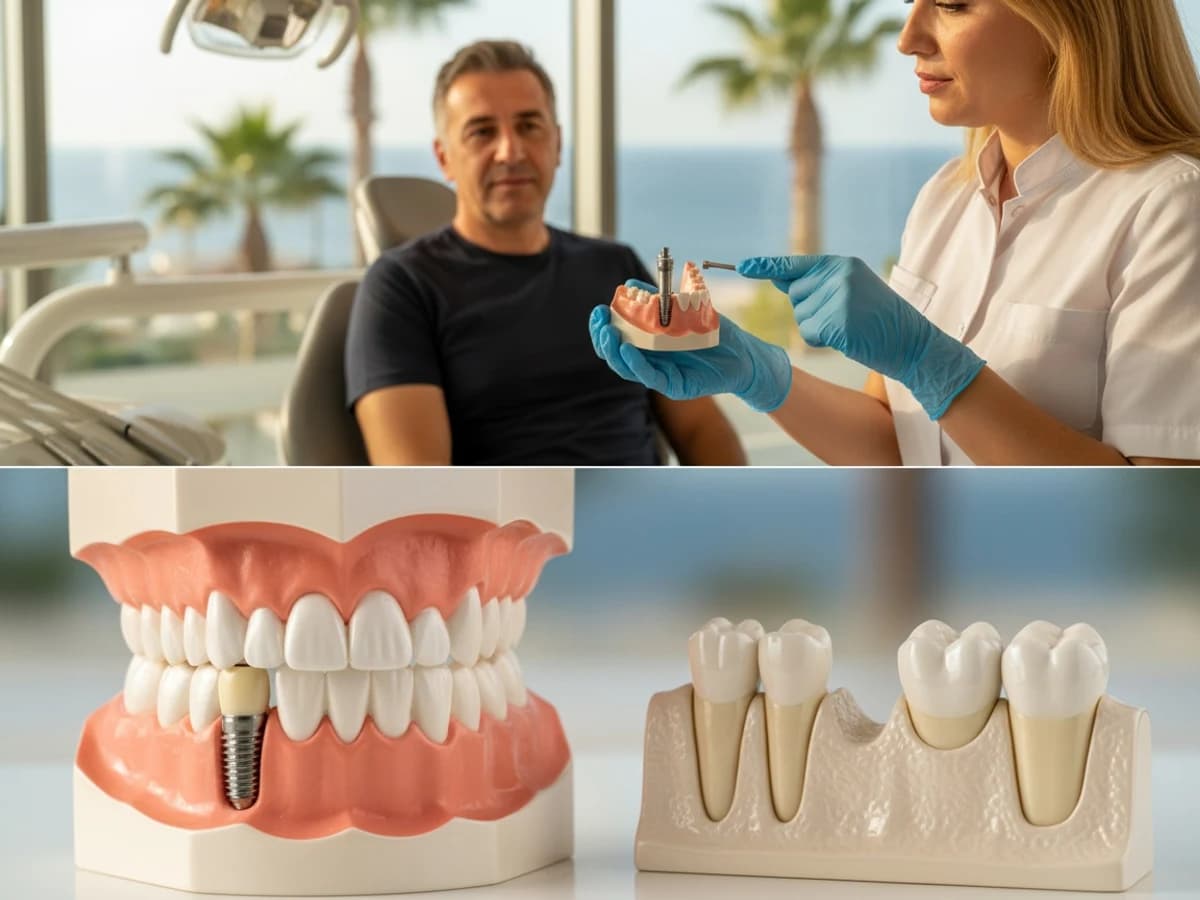
Dental implant or bridge: which tooth replacement is right for me?
Deciding between a single dental implant and a conventional fixed bridge is one of the most common questions patients ask when they are missing a tooth. Both options can restore chewing function and aesthetics, but they differ in surgery, timeline, effects on adjacent teeth, and long‑term maintenance. This guide explains the clinical differences, practical considerations, and questions to ask so you can make an informed choice with your dentist — whether you plan to be treated locally or by our team at Dentsun International in Antalya.
How implants and bridges work — the essentials
Implant-supported single tooth: A titanium or titanium-alloy implant replaces the missing root by being placed into the jawbone, allowed to osseointegrate (bond with bone), and then restored with an abutment and a ceramic or zirconia crown. Because the implant acts like a root, it transmits chewing forces to the bone and does not require alteration of the neighbouring teeth. Modern studies report very high mid‑ and long‑term success: meta-analyses show single-tooth implant success rates in the high 90s over 6–10 years.
Conventional fixed bridge: A bridge uses the teeth adjacent to the gap as abutments. Those teeth are prepared (reduced) to receive crowns, and a pontic (the false tooth) spans between them. This is a non‑surgical and typically faster route to a fixed restoration, but it permanently alters the supporting teeth and can expose them to future decay or root canal treatment. Bridge 10‑year survival figures vary between studies but are generally lower and more variable than implants.
Clinical advantages and trade-offs
- Tooth preservation: Implants conserve neighbouring teeth because they do not require preparation. Bridges require full coverage of abutment teeth.
- Bone health: Implants help maintain alveolar bone by transmitting functional load into the jaw. Without a root or implant, bone resorption in the edentulous area is common over time.
- Treatment invasiveness: Implant therapy is surgical and requires healing time for osseointegration. Bridges are non‑surgical and completed more quickly.
- Predictability and longevity: Well‑placed implants have very favorable long‑term outcomes (many studies report >95% survival at 6–10 years). Bridges can perform well for many years but tend to show more complications related to abutment teeth, such as recurrent decay, debonding, or fracture.
Materials and modern techniques
Implants are most commonly fabricated from titanium or titanium alloy because of predictable osseointegration. Zirconia implants exist and may be used in specific situations. Final crowns may be made from monolithic zirconia for posterior strength, or lithium disilicate (e.max) or layered ceramics for optimal anterior aesthetics. Bridges are usually made from full‑contour zirconia, metal‑ceramic, or lithium disilicate, selected according to span, load, and esthetic needs.
Contemporary best practice uses CBCT imaging, digital intraoral scanning, and prosthetically‑driven planning. Guided surgery can precisely place an implant in the ideal position for the final crown, improving esthetic and hygiene outcomes.
Treatment timeline, recovery and what to expect
Implant pathway: consultation and 3D imaging, surgical placement, a healing period (typically several months to achieve osseointegration), then abutment and crown delivery. Typical timelines for an uncomplicated single implant are commonly in the 3–6 month range; grafting or other preparatory procedures will extend that timeline.
Bridge pathway: tooth preparation, impression or digital scan, provisional restoration, and final cementation — often completed within 1–3 weeks. Recovery from bridge preparation is usually quick, with temporary sensitivity as the most common issue.
Maintenance and common complications
- Implants: Routine oral hygiene (twice daily brushing, interdental brushes, floss or implant-specific aids) and regular professional check-ups to monitor soft tissue and bone. Peri-implant mucositis and peri-implantitis are recognized risks and early detection is key.
- Bridges: Meticulous cleaning under the pontic (floss threaders, superfloss, interdental brushes) is essential. Common complications include cement washout, recurrent decay at abutments, de-bonding, and fracture. A bridge’s longevity depends heavily on the health of the supporting teeth.
Who is a good candidate for each option?
Implants are often the preferred tooth‑conserving option when:
- Adjacent teeth are healthy and you want to avoid altering them.
- There is adequate bone volume or you are willing to consider bone grafting.
- You are in good general and oral health, with controlled risk factors (or can make behavioural/medical changes such as quitting smoking).
A bridge may be preferred when:
- Adjacent teeth already require crowns — combining treatments can be efficient and logical.
- Implant surgery is contraindicated or the patient prefers to avoid surgery.
- Immediate fixed replacement is a priority and grafting is not feasible.
Making the decision: practical steps
Before deciding, discuss the following with your dentist:
- Health of the neighbouring teeth and presence of gum disease.
- Bone volume and whether CBCT shows the need for grafting.
- Medical and lifestyle factors that affect healing (smoking, diabetes, bruxism).
- The restoration materials, expected maintenance, and long‑term care plan.
- What contingency plans exist if complications occur (e.g., abutment tooth failure or implant complications).
Why consider Antalya and Dentsun International for treatment?
Many international patients choose Antalya for dental treatment because the city combines modern clinics with experienced teams and convenient travel connections from Europe. At Dentsun International we use CBCT, digital scanning, and prosthetically driven implant planning so you receive evidence-based care tailored to your situation. Whether you prefer a non‑surgical bridge or a prosthetically guided implant, our team will outline the clinical reasons behind each recommendation and a clear timeline for treatment and follow‑up.
Final thoughts
In most cases where a single tooth is missing and the patient is a suitable candidate, a single implant is the most tooth‑conserving and durable fixed solution. A bridge remains a valuable option when surgery is contraindicated, adjacent teeth already need crowns, or a faster fixed restoration is required. The best choice depends on your oral health, anatomy, medical background, and personal preferences — and it should be made after careful assessment and a clear discussion of risks, benefits, and maintenance. If you’d like a personalized consultation, Dentsun International’s team in Antalya can provide a detailed clinical assessment and help you choose the option that fits your long‑term oral health goals.


