

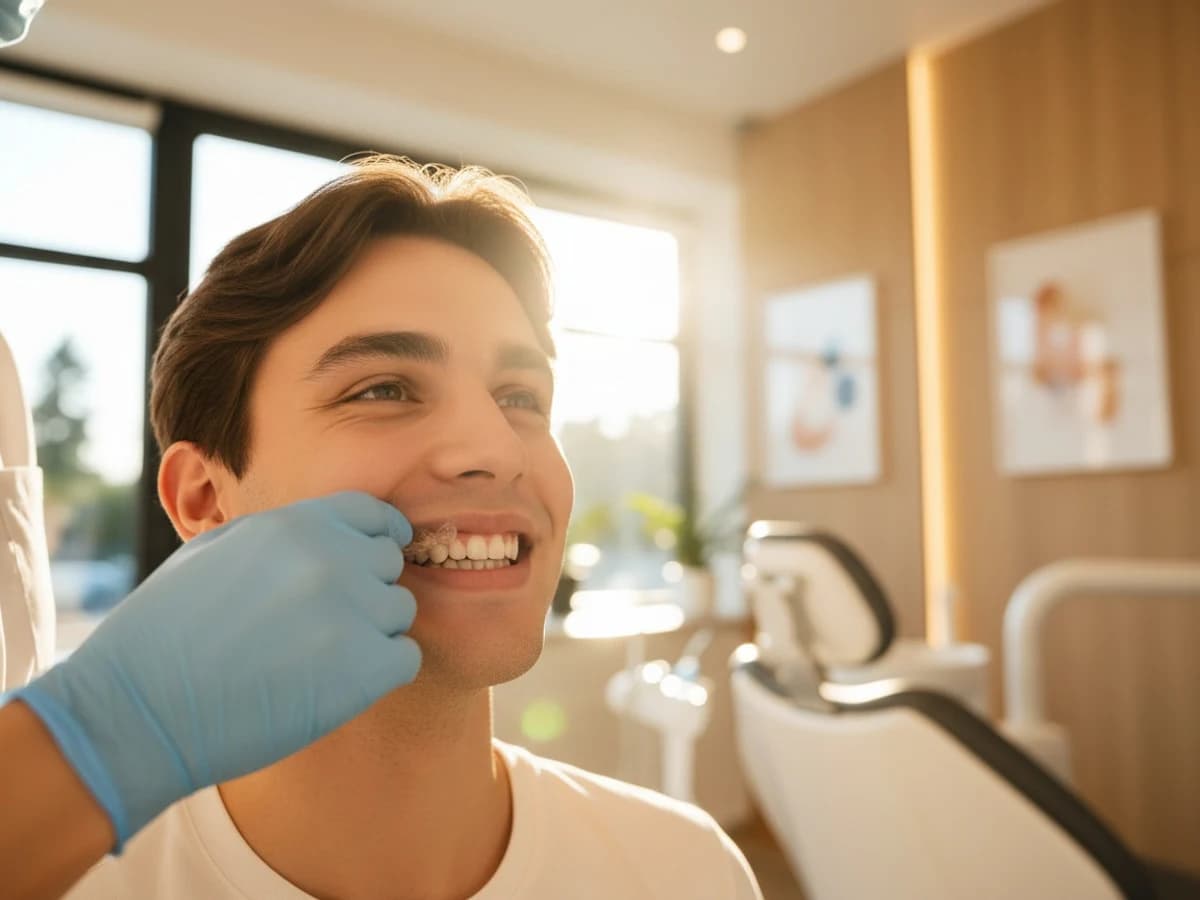
How many hours per day should clear aligners be worn?
Clear aligner therapy is a popular, discreet way to straighten teeth — but the single most important factor for predictable results is how long you wear your trays each day. For most patients the clinical recommendation is 20–22 hours per day. That means aligners are in place almost all waking and sleeping hours, removed only for eating, drinking anything other than water, and oral hygiene.
Why daily wear time matters
Clear aligners move teeth by applying gentle, staged forces. Those forces only act while the aligner is seated on the tooth surface. If the trays are out of the mouth for long periods, tooth movement slows and planned corrections can drift off schedule. In practice, inconsistent wear is the most common reason for longer treatment and less accurate final results.
Typical schedules and how tray changes work
Treatment is executed through a sequence of numbered trays, each designed to move teeth slightly toward the final alignment. Many modern plans use a tray-change rhythm of every seven days, although some clinicians use 10- or 14-day intervals depending on the complexity of the movement. Shorter intervals (for example 7 days) are increasingly supported by clinical studies for appropriate cases because they can shorten total treatment time, while slower intervals may be preferable for difficult posterior or root movements.
Risks of noncompliance
- Slower progress and extended treatment time — taking trays out for several extra hours per day accumulates lost treatment days.
- Fit problems — inconsistent wear may make a new tray feel loose, which reduces force delivery and can require a revision or refinement stage.
- Increased discomfort or unexpected tooth movement — gaps or tipping can occur if forces aren’t applied continuously as planned.
- Higher chance of refinements or additional aligners — your clinician may need to revise the digital plan if progress falls behind.
Practical tips to reach 20–22 hours daily
Staying inside the recommended wear window is achievable with small habit changes. Try these practical strategies:
- Remove trays only for meals and oral care: Treat aligners like a continuous appliance — take them out to eat, drink anything other than water, and to brush and floss, then put them back immediately.
- Use a standard routine: Aligners reinserted after breakfast, after lunch, and after dinner keeps wear consistent. Changing to a new tray at bedtime often eases the pressure felt overnight.
- Carry a care kit: A compact case, a soft toothbrush, toothpaste, and a small mirror let you clean teeth and trays on the go so you can reinsert quickly.
- Set reminders: Use phone alarms, wear-time apps, or your clinician’s compliance tools to track daily hours and tray-change dates.
- Chewies and seating aids: If a tray feels loose, chew on an aligner “chewie” or a folded piece of gauze for a few minutes to help seat the tray fully and restore contact.
- Plan meals: Fewer snacking episodes reduce the number of times you remove trays, which helps accumulate the necessary daily hours.
Hygiene, cleaning, and care
Good hygiene protects oral health and keeps aligners fitting properly. Follow these steps every day:
- Brush and floss before reinserting aligners after each meal — food particles can trap bacteria and stain trays.
- Rinse trays with lukewarm (not hot) water when removing; hot water can warp thermoplastic material.
- Clean trays gently with a soft toothbrush and clear, non-abrasive soap or the cleaning solution recommended by your provider — avoid whitening toothpaste or abrasive cleaners that can scratch the surface.
- Store trays in their case when removed — folding napkins or loose placement increases the risk of loss or damage.
- Avoid smoking or drinking colored beverages with aligners in place, as these increase staining and odor.
Materials and technology behind aligners
Most clear aligners are molded from transparent thermoplastics such as polyethylene terephthalate glycol-modified (PET-G) or thermoplastic polyurethane (TPU). These materials are chosen for resilience, clarity, and ability to deliver controlled force. Digital intraoral scanning, 3D treatment planning, and computer-guided staging make movement predictable and let clinicians simulate outcomes before fabrication. Some complex cases may also use CBCT scans to assess root position and bone support, though routine aligner planning often relies on high-resolution surface scans and digital models.
Aftercare and retention
Once active aligner therapy is complete, retention is essential to keep teeth in their new positions. Most patients will wear retainers nightly, and some clinicians recommend daytime wear initially. The exact retention protocol varies by case, but the principle is universal: newly moved teeth need time to remodel bone and ligaments, and retainers help prevent relapse.
When something goes wrong — lost or damaged trays
If a tray is lost, damaged, or becomes uncomfortable, contact your treating clinic promptly rather than skipping trays or jumping ahead. In many cases, your clinician can advise whether to move to the next tray, return to the previous one, or use a temporary solution while a replacement is made. Dentsun International provides remote support for international patients, and our team can guide you through next steps if issues arise while you’re traveling.
Making aligner treatment work for you
For most people, the clear answer is to aim for 20–22 hours of wear each day. That level of compliance gives aligners the continuous contact they need to move teeth efficiently and keep your treatment on schedule. With straightforward hygiene habits, a few practical routines, and prompt communication with your dental team, successful aligner treatment is very achievable.
If you’re considering aligner therapy while visiting Antalya, Turkey, or planning care abroad, Dentsun International can help with digital planning, clear communication across time zones, and a care pathway tailored to international patients. Antalya combines modern dental facilities with convenient travel connections and a comfortable recovery environment — an attractive option for many patients seeking high-quality orthodontic care.


